Deutsch
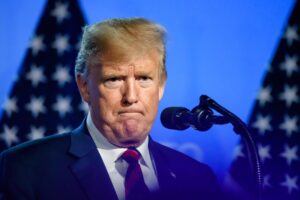
Since taking office in January 2025, Donald Trump has transformed the USA into a global crypto laboratory. What began as a populist promise during the 2024 campaign is now government policy. But behind the scenes of “America First” crypto policy, critical voices are growing. We take stock: Has Trump liberated the market, or has he merely privatized it? A critical overview.
The 180-degree turn: From “scam” to “savior”
One must not forget where Donald Trump started. In 2019, he still called Bitcoin a “scam” and a tool for criminal activities. The fact that he is acting as the “Crypto-in-Chief” today, in the spring of 2026, is one of the most remarkable turnarounds in modern economic history.
The turning point was the 2024 Bitcoin Conference in Nashville. There, he promised not only to fire SEC Chairman Gary Gensler—which he promptly did in January 2025—but also to create a national strategic Bitcoin reserve. For many observers, however, this was less an ideological conversion and more of a strategic move to secure a financially powerful voter base and the multi-billion dollar crypto lobby.
World Liberty Financial: An unprecedented conflict of interest?
The most controversial chapter of his term remains the World Liberty Financial (WLFI) project. Launched during the campaign and led under the auspices of his sons Eric and Donald Jr., this project raises fundamental ethical questions.
Critics accuse the Trump family of abusing the office of the President as a marketing platform for a private crypto protocol.
- The accusation: While Trump dismantles regulatory hurdles for the sector, his family-owned company directly benefits from these relaxations.
- Transparency gap: To this day, it remains unclear how far the separation between the White House and the business activities of WLFI actually goes. In Switzerland or Germany, such a mixing of public office and private token sales would be a political scandal of the highest order.
The strategic Bitcoin reserve: Visionary or dangerous?
One of the core promises was the accumulation of up to 1 million Bitcoin by the US Treasury. As of April 2026, the US government has indeed begun to stop selling seized holdings and instead declare them a “National Treasure.”
The critical perspective: While the idea of a state Bitcoin reserve has pushed the price to new record highs, it carries enormous risks. Critical economists warn of a massive market distortion. If the world’s largest economy acts as a “HODLer,” Bitcoin loses part of its role as decentralized money independent of the state. Furthermore, the question arises: What happens when the administration changes? Bitcoin’s volatility could hold the US national budget hostage.
Regulation: A breakthrough or the “Wild West”?
Under the new, crypto-friendly leadership of the SEC, numerous cases against industry giants have been dropped. For the industry in the DACH region, this is a double-edged sword.
On one hand, the US course provides a global tailwind. On the other hand, regulatory authorities in Switzerland and the EU fear that the USA is inviting systemic risks through “deregulation at any price.” While Europe relies on clear rules with the MiCA regulation, Trump seems to favor the principle of “growth over safety.” The protection of retail investors, it is feared, is taking a backseat to the interests of large crypto miners and exchanges.
Recommended reading: MiCA – Crypto regulation in the EU
Impact: The “pull effect” from overseas
For investors, Trump’s policy has direct consequences:
- Capital flight: Many crypto startups that previously valued the legal certainty of Switzerland are now eyeing a move to the USA, where they can expect fewer questions and more state support.
- ETF euphoria: The flood of new, more exotic crypto ETFs in the USA is putting pressure on European issuers to follow suit more quickly, increasing complexity for private investors.
- Currency stability: The massive state promotion of crypto by Washington is seen by some as an attack on the dollar’s status as the world’s reserve currency. As a result, European institutions are also increasingly looking for digital hedges.
Conclusion: A dangerous precedent
Donald Trump has undoubtedly catapulted Bitcoin into the mainstream. He has given the industry long-awaited legitimacy through the most powerful office in the world. But the price for this is high. The line between the public good and personal enrichment has become dangerously thin. For the long-term success of Bitcoin as a decentralized network, “Trumpification” is a risk. Bitcoin was created to be independent of individual leaders. However, if the fate of the entire market now depends on the tweets and decrees of a single man in the Oval Office, that is the exact opposite of what Satoshi Nakamoto once intended. Our recommendation: Enjoy the price gains, but stay vigilant. Washington’s crypto policy is currently a high-gloss show. Whether the foundation is stable enough to survive a global crisis remains to be seen.